
Hill Street Blues did not simply reinvent the television police drama — it quietly changed the language of television itself.
When the series first appeared on NBC in January 1981, many viewers genuinely did not know what to make of it. The programme felt chaotic, noisy, emotional and strangely authentic compared with the polished police dramas audiences were used to seeing at the time.
Yet there were also viewers who immediately sensed that something remarkable was happening. Long before social media or internet fandoms existed, people talked about Hill Street Blues at work, in bars and around dinner tables. Word slowly spread that television drama had suddenly become more intelligent, more human and far less predictable.
Over seven seasons and 146 episodes, the series transformed network television. It introduced overlapping dialogue, continuing storylines, ensemble storytelling and a level of emotional realism rarely seen on American television during the early 1980s. In doing so, it influenced generations of television writers, producers and directors.
Today, more than forty years later, Hill Street Blues still feels remarkably modern — which may ultimately be the clearest measure of just how far ahead of its time the series truly was.
Hill Street Blues At A Glance
- Original Broadcast: 1981–1987
- Episodes: 146
- Network: NBC
- Created by: Steven Bochco and Michael Kozoll
- Genre: Police drama / ensemble television drama
Before The Hill
To fully appreciate the impact of Hill Street Blues, it helps to remember what most television police dramas looked like before it arrived. Series such as Cannon, Police Story and The Streets of San Francisco were often entertaining, but they usually revolved around a central hero solving a self-contained case within a single episode.
Even when programmes experimented with darker material, the structure itself remained familiar and reassuring. Dialogue was carefully staged, storylines neatly resolved and characters generally returned to normal by the following week. Television drama rarely embraced confusion, emotional overlap or moral uncertainty.
There were important exceptions. Joseph Wambaugh’s Police Story had already introduced a grittier and more believable portrayal of police life, while series such as Kojak had begun moving towards a stronger ensemble approach. Yet even these productions still largely followed traditional television rhythms.
Hill Street Blues shattered those conventions almost immediately. Instead of polished certainty, the series presented viewers with noise, movement, interruptions and emotional unpredictability. Characters spoke over one another. Storylines stretched across multiple episodes. Officers carried personal problems into the workplace and often made serious mistakes.
“No other police drama had ever felt quite so alive.”Television critics reflecting on the early seasons
The series also changed how television itself looked. Hand-held cameras, overlapping conversations and rapid scene transitions created an almost documentary-like atmosphere that felt radically different from the carefully staged productions audiences had grown accustomed to during the 1970s.
For some viewers the experience initially felt confusing. Others instantly recognised that television drama had suddenly become more ambitious, more emotional and far closer to real life.
Building The Hill
The origins of Hill Street Blues can largely be traced to writer and producer Steven Bochco, who had already worked on series such as Columbo, McMillan & Wife and Delvecchio. Bochco wanted to move television drama away from simplistic heroes and formula storytelling towards something that felt more layered, unpredictable and emotionally honest.
Working alongside producer and writer Michael Kozoll, Bochco developed a police drama that deliberately broke many established television conventions. Rather than focusing on a single star character, Hill Street Blues presented an entire community of police officers, administrators, criminals, lawyers and ordinary citizens whose lives constantly overlapped.
The fictional Hill Street precinct itself became one of television’s great dramatic environments — chaotic, underfunded, emotionally exhausting and strangely human. Officers arrived at roll call carrying personal problems, broken relationships, exhaustion and fear directly into the workplace. Cases often remained unresolved and victories were frequently temporary.
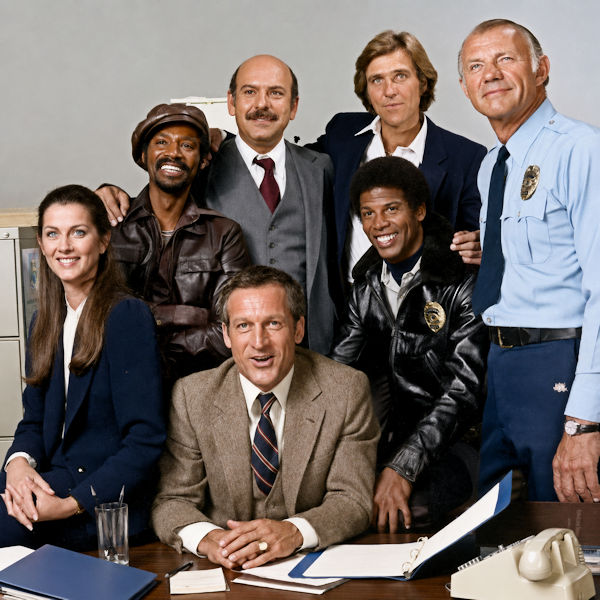
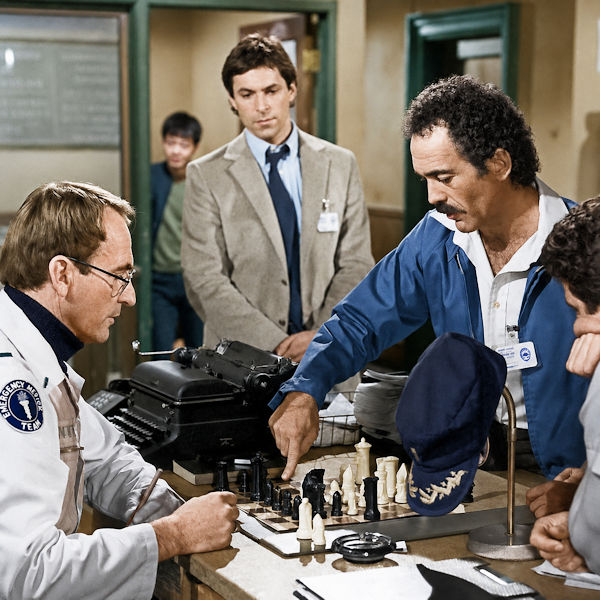
Part of the series’ realism came from its remarkable ensemble cast. Daniel J. Travanti, Michael Conrad, Veronica Hamel, Bruce Weitz, Michael Warren, Charles Haid, Betty Thomas, Joe Spano and many others created characters who felt believable not because they were perfect, but because they often appeared vulnerable, flawed and emotionally complicated.
The production style itself also played a major role in shaping the programme’s identity. Hand-held cameras, overlapping dialogue and densely layered scenes created the impression that viewers were observing real lives unfolding rather than watching carefully staged television performances.
For audiences accustomed to conventional television drama, the experience could initially feel overwhelming. Characters sometimes disappeared for several episodes before returning unexpectedly, storylines evolved gradually over time and conversations often continued underneath one another in ways rarely heard on television during the early 1980s.
“Let’s be careful out there.”Sergeant Phil Esterhaus
The famous closing line delivered by Sergeant Esterhaus at the end of each roll call eventually became one of the most recognisable phrases in television history. Yet even this simple moment reflected the deeper humanity running throughout the series — beneath the humour and chaos, the officers of Hill Street genuinely feared they might not all return safely at the end of the day.
Why It Felt Real
Part of what made Hill Street Blues so unusual was that the series rarely treated its characters as traditional television heroes. Officers made poor decisions, relationships failed, careers stalled and emotional exhaustion constantly hovered beneath the surface of the precinct.
Captain Frank Furillo struggled to balance compassion with leadership. Joyce Davenport fought an often frustrating legal system while trying to preserve her relationship with Frank. Detective Belker could appear frightening, ridiculous or unexpectedly gentle within the space of a single episode. Even apparently comic characters were usually carrying some deeper sadness or vulnerability.
The programme also understood something many police dramas ignored — that humour often exists alongside stress, danger and tragedy. Much of the series’ warmth came from the way officers joked, argued and irritated one another simply to survive the emotional pressure of the job.
“Some days you watched Hill Street Blues for the drama. Other days you watched because the characters felt like people you genuinely knew.”Reflections from long-time viewers of the series
Unlike many television dramas of the period, the city itself also felt alive. The Hill was never presented as a glamorous television backdrop. Instead it appeared crowded, unpredictable, occasionally dangerous and permanently exhausted. Street people, addicts, minor criminals, lawyers, victims and police officers all occupied the same uneasy world.
The writing refused to divide people neatly into heroes and villains. Criminals were sometimes sympathetic. Police officers could behave selfishly or recklessly. Good intentions often led to failure. This moral ambiguity gave the series an emotional maturity still missing from many modern dramas.
Perhaps most importantly, Hill Street Blues trusted its audience. Conversations were not artificially simplified and viewers were expected to pay attention. Characters frequently interrupted one another or referred to events the audience had not fully seen. Rather than weakening the storytelling, this made the world of the series feel larger and more believable.
Even now, decades later, many modern television dramas still borrow techniques first refined during the early years of Hill Street Blues. The series did not merely influence police television — it helped redefine what television drama itself could become.
The World Of The Hill
One of the most intriguing aspects of Hill Street Blues was that the series never clearly identified exactly where “The Hill” was supposed to exist. The city felt unmistakably real, yet deliberately difficult to define.
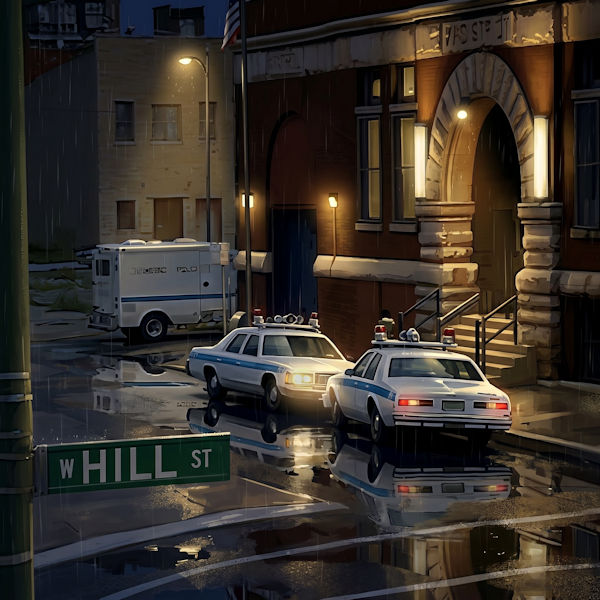
Most fans recognise that the famous exterior of the Hill Street precinct house is located in Chicago, while much of the series itself was filmed in Los Angeles at CBS Studio Center in Studio City. Early episodes also included location filming in Chicago, further adding to the programme’s unusual visual identity.
Yet the fictional world of the series borrowed details from several American cities at once. Philadelphia City Hall frequently appeared in the background, references suggested connections to New York and certain locations mentioned within scripts appeared to echo parts of Buffalo, where writer and producer Tom Fontana was raised.
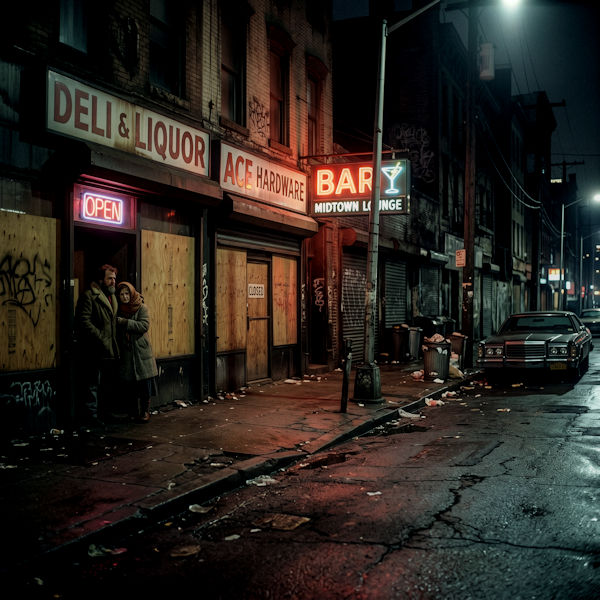
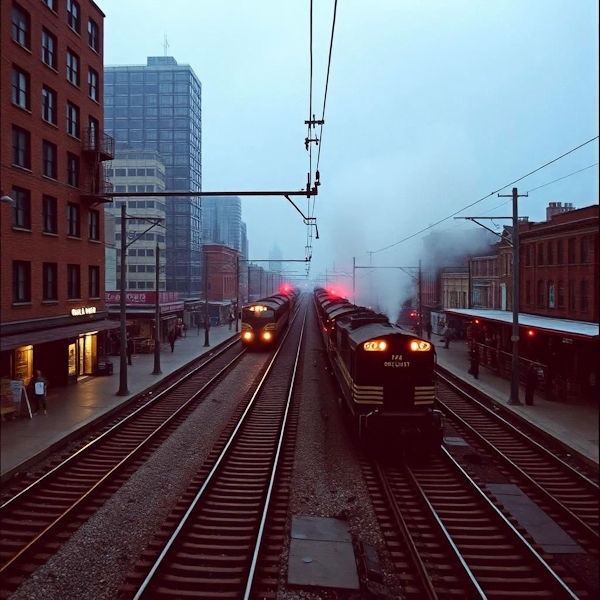
Neighbourhoods such as Jefferson Heights, Polk Avenue, South Ferry and Washington Heights gradually became part of the mythology of the series. Even viewers who could never place the city geographically often felt they somehow understood its streets, politics and atmosphere instinctively.
This ambiguity may actually have strengthened the programme. Rather than depicting one precise location, Hill Street Blues created the feeling of a large American city struggling with crime, poverty, bureaucracy and exhaustion during the late 1970s and early 1980s.
“The Hill never felt fictional. It felt remembered.”Television historians discussing the series’ atmosphere
Even the roll-call room itself became iconic. The battered desks, tired officers, background noise and chaotic conversations created an environment unlike anything viewers had previously seen on network television. It felt less like a television set and more like a functioning workplace people happened to be filming inside.
That sense of lived-in realism remains one of the series’ greatest achievements and helps explain why the world of Hill Street Blues continues to feel emotionally authentic decades after the programme first aired.
Why It Still Matters
More than four decades after its first broadcast, Hill Street Blues still feels strikingly modern. Many younger viewers discovering the series for the first time are often surprised by how contemporary its storytelling techniques now appear.
Long-form character arcs, morally complicated protagonists, overlapping dialogue and emotionally serialised storytelling are now common throughout modern television drama. Yet in the early 1980s these techniques felt radical, unpredictable and commercially risky.
Today audiences are accustomed to complex ensemble dramas and season-long narratives through streaming television and prestige cable productions. Looking back now, it becomes easier to appreciate just how far ahead of its time Hill Street Blues truly was.
“Hill Street Blues helped teach television how to grow up.”A view shared by many television critics and historians
The influence of the series can still be seen across modern television. Programmes such as NYPD Blue, The Wire, ER, The West Wing and countless later ensemble dramas all inherited techniques first refined on Hill Street Blues.
Yet the series survives not simply because it was influential, but because it still remains deeply human. Beneath the humour, chaos and procedural storytelling were characters trying to navigate difficult jobs, fragile relationships and emotional exhaustion while somehow retaining their humanity.
Perhaps that is ultimately why so many viewers continue returning to the programme decades later. The technology, fashions and police procedures may belong to another era, but the people themselves still feel recognisable.
Beyond The Hill
One of the most remarkable things about Hill Street Blues is how many of the people connected with the programme went on to shape television and film in the decades that followed. Many members of the cast were relatively unknown when they first arrived on “The Hill”, yet numerous performers later built long and successful careers both in front of and behind the camera.
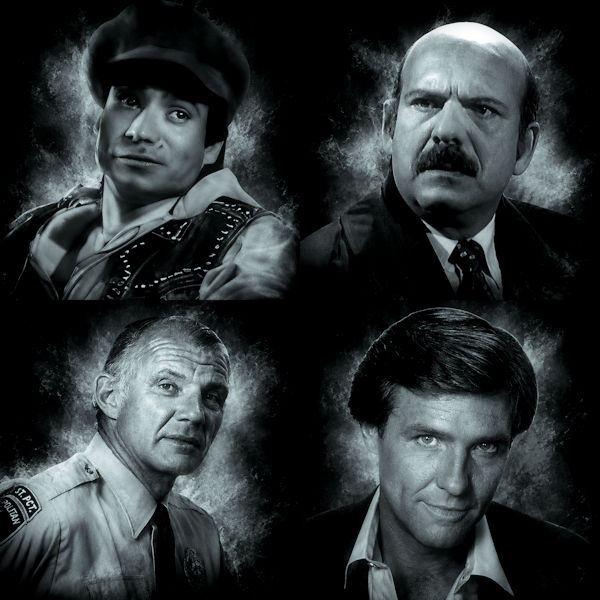
Sadly, there is also a certain poignancy surrounding the series today. A surprising number of cast members and recurring performers were lost far too early, including the actors who played Sgt. Esterhaus, J.D. LaRue, Capt. Ray Calletano and Jesus Martinez. One guest actress connected to the programme was even murdered while the series remained in production.
“People came through Hill Street Blues and carried pieces of it into television history.”Reflections on the programme’s creative legacy
The influence extended far beyond the actors themselves. Writers, producers and directors who worked on Hill Street Blues later helped create many of the finest television dramas of the following forty years. Most continued speaking fondly about their experiences on the series and references to “The Hill” would occasionally reappear in their later productions.
Some connections became part of television folklore. Early concepts for Miami Vice reportedly imagined Hill and Renko-style characters at the centre of the series, while the name “Sonny Crockett” appeared first within Hill Street Blues. Even the eccentric character “Buck Naked” would later reappear years afterwards in NYPD Blue.
That continuing creative thread perhaps explains why Hill Street Blues still feels so influential today. The series did not simply inspire later television — many of the people who built modern television drama passed directly through the chaotic roll-call room of the Hill Street precinct itself.
In the end, Hill Street Blues was never really about solving crimes. It was about people attempting to hold themselves together inside an imperfect world — sometimes succeeding, sometimes failing, but always feeling unmistakably real.